How Deep Should a Ground Screw Be Installed?

The depth at which ground screws are installed is crucial for the stability and safety of solar mounting systems. These screws act as the foundation, so getting the depth right is key to long-term performance.
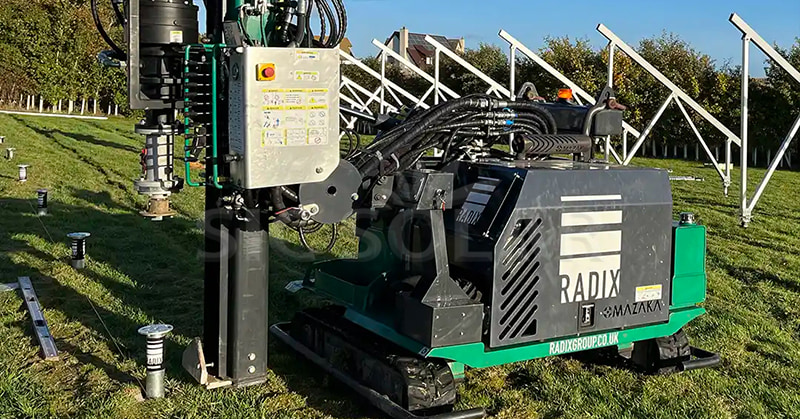
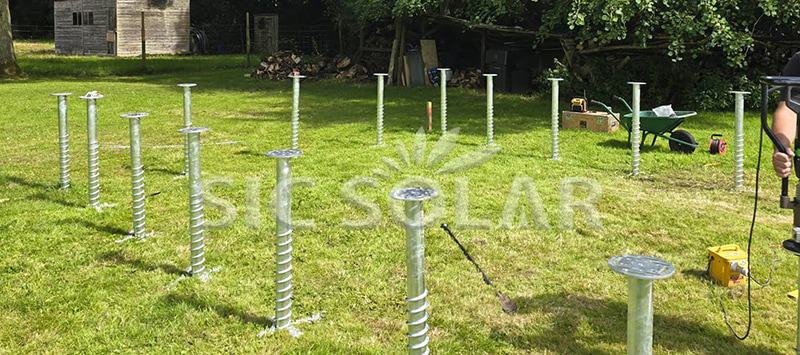
diy ground screws

Installation depth varies based on factors like soil type, load needs, and weather conditions. Usually, ground screws go between 1.2 and 2.5 meters deep, but this depends on the specific site.

Soil type matters a lot. Firm soils like clay or gravel allow for shallower depths, while softer soils like sand require deeper screws to stay stable. The idea is to anchor into solid ground to resist pulling and sideways forces.

Load requirements also affect depth. Systems must handle wind and snow, so bigger setups or those in windy areas often need deeper screws. Engineers figure these needs out during design to make sure the foundation holds up.

In colder places, screws must go below the frost line to avoid shifting from freeze-thaw cycles. Installing above this line risks movement that can misalign the panels.

Correct installation technique is key, too. Screws must be driven straight and to the right depth with proper equipment. If not, the foundation’s strength can be compromised. Professionals ensure specs are met.

Many modern mounting systems, like those from SIC Solar, are designed to fit well with ground screw foundations, improving both ease of installation and stability.

Soil testing before installation is common. It helps engineers understand soil properties and select the right screw type and depth.

In short, there’s no universal depth for ground screws. The right depth depends on engineering, soil, and environment to keep the solar system stable and durable over time.
How Do You Attach Solar Panels to a Metal Roof?

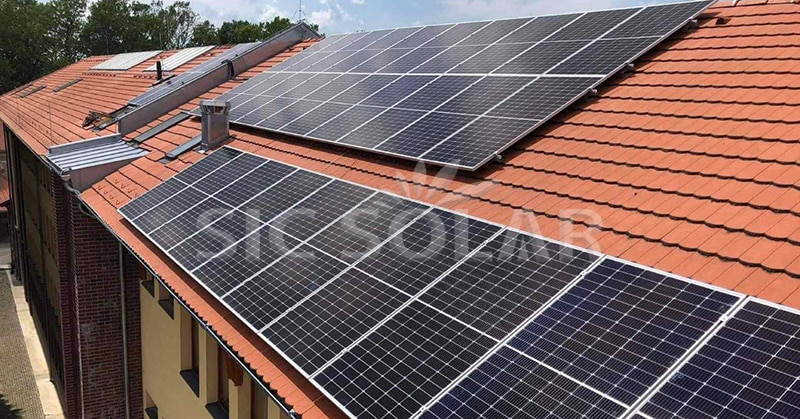
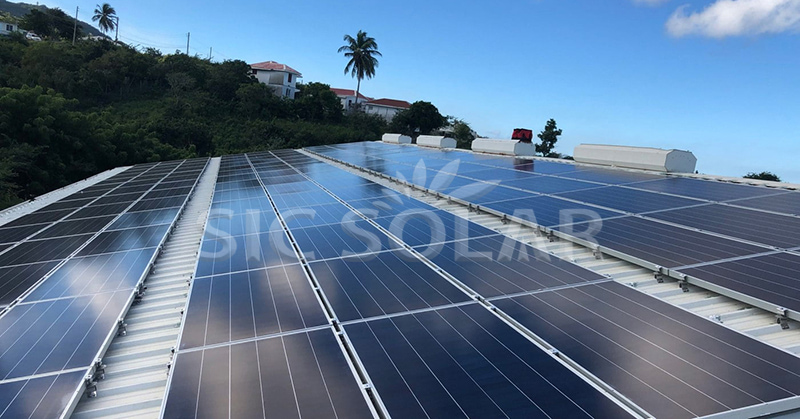
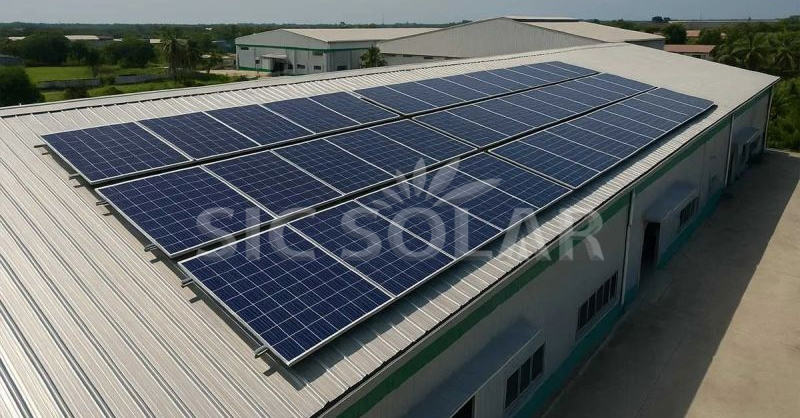
Metal roofs are great for installing solar panels because they last a long time and are durable. But to attach solar panels properly, you need the right mounting method to keep everything stable and waterproof. The way you install them depends on whether the roof is a standing seam or corrugated metal.

Non penetrating roof mount solar

For standing seam roofs, the usual method is to use clamps. These clamps grip the raised seams without drilling holes. Tightening the screws on the clamps holds them firmly on the seam, providing a strong spot to attach mounting rails or brackets. This way of mounting avoids piercing the roof, which helps keep it waterproof and lowers the chance of leaks. After the clamps are in place, rails are attached to them, and solar panels go onto the rails using mid and end clamps.

For corrugated or trapezoidal metal roofs, the process is a bit different. These roofs don’t have raised seams for clamps, so the mounting system uses self-tapping screws or hanger bolts to fix brackets directly to the roof structure. The fasteners go through the metal and into the supporting purlins or rafters underneath. To keep water out, sealing parts like EPDM rubber washers are placed around the holes.

Another key part of installation is getting the alignment and layout right. Installers measure and mark where to put the mounting parts so the solar panels are evenly spaced and positioned to catch the most sunlight. Proper alignment also spreads the weight evenly on the roof, which helps keep things stable over time.

Mounting rails are important since they hold the solar panels in place. Once the rails are fixed to the clamps or brackets, the panels are attached to the rails with special clamps. This setup makes installation easier and also makes future maintenance simpler.

Using good-quality materials matters too. The system will be outside for many years, so mounts need to resist corrosion and wear. Aluminum and stainless steel are often chosen because they’re strong and don’t rust easily. Quality parts help keep the system secure for a long time.

Companies like SIC Solar offer a variety of mounting solutions made specifically for metal roofs. Their products include clamps for standing seams, roof brackets, rails, and fasteners designed to fit well and be easy to install. Using these well-designed systems helps installers make sure the setup is sturdy and waterproof.

Electric grounding and cable organization are also part of the process. Proper grounding makes the system safer, and tidy cable management keeps everything neat and efficient. These details help improve how well the system works and how long it lasts.

In short, installing solar panels on a metal roof means choosing the right mounting method for the roof type, sealing penetrations carefully, and using durable components. With a good design and careful installation, metal roofs can safely support solar energy systems for many years.

What Is a Standing Seam Clamp?

For rooftop solar on metal roofs, picking the right mounting method is key to keeping the structure safe and protecting the roof. A common part used here is the standing seam clamp, which secures panels without harming the roof.

thin film solar for metal roofs

A standing seam clamp fits onto metal roofs with raised vertical seams. Instead of drilling holes, it clamps onto these seams, offering a solid hold without penetrating the roof.

Its main job is to attach rails or brackets firmly without causing leaks. The clamp uses screws or pressure to grip the seam, preserving the roof’s waterproof layer—an important factor for rooftop solar.

One big benefit is that it avoids drilling. Traditional mounts need holes, which can leak if not sealed well. Standing seam clamps skip this, speeding up installation and lowering future maintenance risks.

They’re also simple to install and usually need fewer tools. Installers can quickly clip them on and fix other parts, cutting labor time and cost.

Made from strong aluminum or stainless steel, these clamps resist rust and weather. This durability matters since solar setups should last for many years.

Fits matter too. Different seam shapes need specific clamp designs. Many manufacturers, like SIC Solar, offer various clamps to match roof profiles, easing installation and ensuring a secure fit.

Structurally, these clamps help spread out wind and snow loads along the roof, lowering stress points and boosting stability.

Overall, standing seam clamps offer a practical, reliable way to mount solar panels on metal roofs. They protect the roof and support a solid installation without needing to drill in.

Why Is Ground Mount Solar More Expensive?

When planning a solar project, one of the first questions developers often face is whether to put panels on a rooftop or set up a ground-mounted system. Ground mounts tend to be more flexible and can produce more energy, but they usually cost more than rooftop setups. Knowing why the cost varies can help owners make smarter choices.

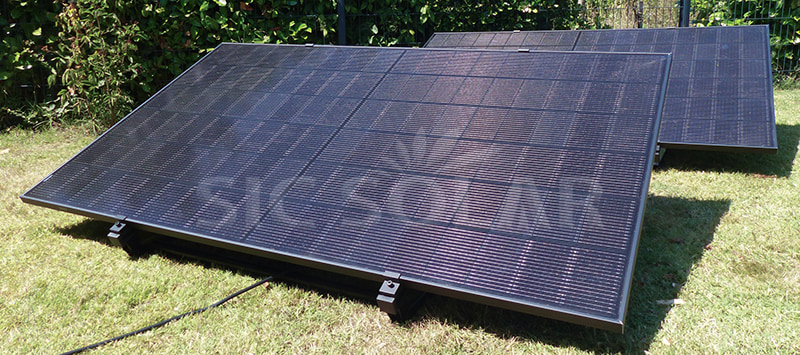
ground mount solar structure

A big reason for the cost difference is the foundation. Ground-mounted panels need a solid base, like concrete footings or ground screws, to keep them stable against wind, snow, and other weather. Building these foundations means more materials, special tools, and extra labor, which adds to the cost. Rooftop systems, on the other hand, rely on the building’s existing structure, which cuts down on foundation expenses.

Labor and the complexity of installation also play a role. Ground mounts require site surveys, land prep, and setting up multiple rows of racks. The panels have to be lined up carefully to catch the most sunlight. Rooftop installs tend to be simpler, with fewer parts and quicker work since they go on existing roofs.

Material use is another factor. Ground systems need bigger racks and stronger support to keep panels safely off the ground. These racks must be tough, resist corrosion, and handle weather over many years. Companies like SIC Solar make quality mounting gear for ground setups, but the extra materials raise the price compared to rooftop racks.

Site conditions matter, too. Ground-mounted arrays might need leveling, removing plants, or other soil work, especially on uneven or sloped land. Wiring, inverters, and safety gear might also be more complicated because of the distance between panels and the building or grid.

Maintenance and access affect cost as well. Ground systems are easier to reach for cleaning or fixes, but making sure they’re safe and durable calls for good design and reliable parts. Providers like SIC Solar offer mounts that keep the structure solid and lasting, which adds to the upfront cost.

While ground mounts often cost more initially, they bring benefits like better panel positioning, natural cooling from air flow, and easier expansion. For large projects with plenty of space, these advantages can make the extra expense worthwhile.

Agrivoltaics Collection | JinMega Solar Mounting Systems

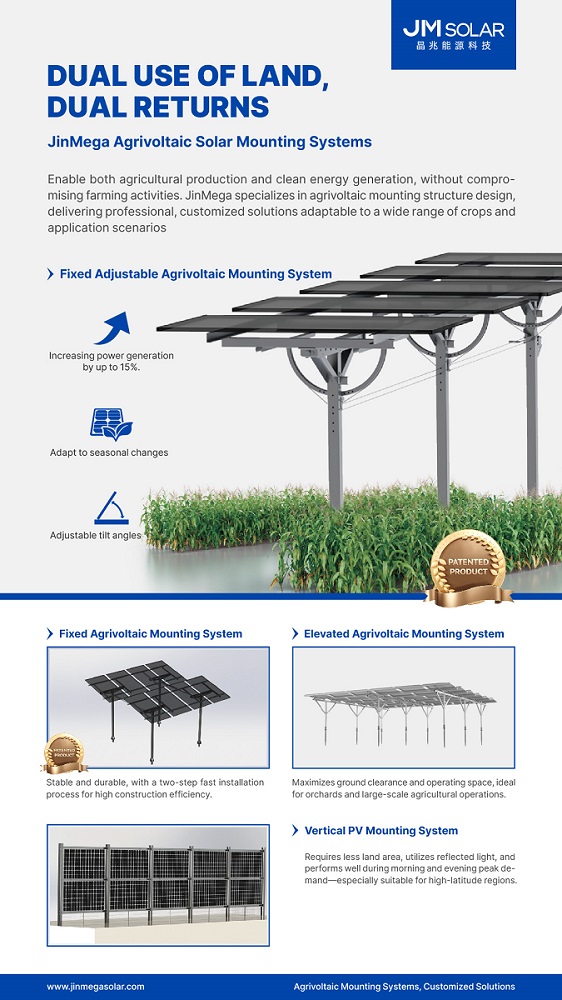
Clean energy and agriculture can grow together. JinMega’s agrivoltaic mounting solutions are designed to support stable solar generation while preserving agricultural production, creating long-term dual value for land use.


This collection brings together four specialized agrivoltaic systems, covering different crops, terrains, and application scenarios, from farmland and orchards to large-scale agricultural operations.


Smart design. Flexible structures. Scalable deployment. One land resource. Dual value creation. https://www.jinmegasolar.com/agriculture-solar-mounting-systems

Project Spotlight | Rooftop Solar Mounting System in Okinawa, Japan

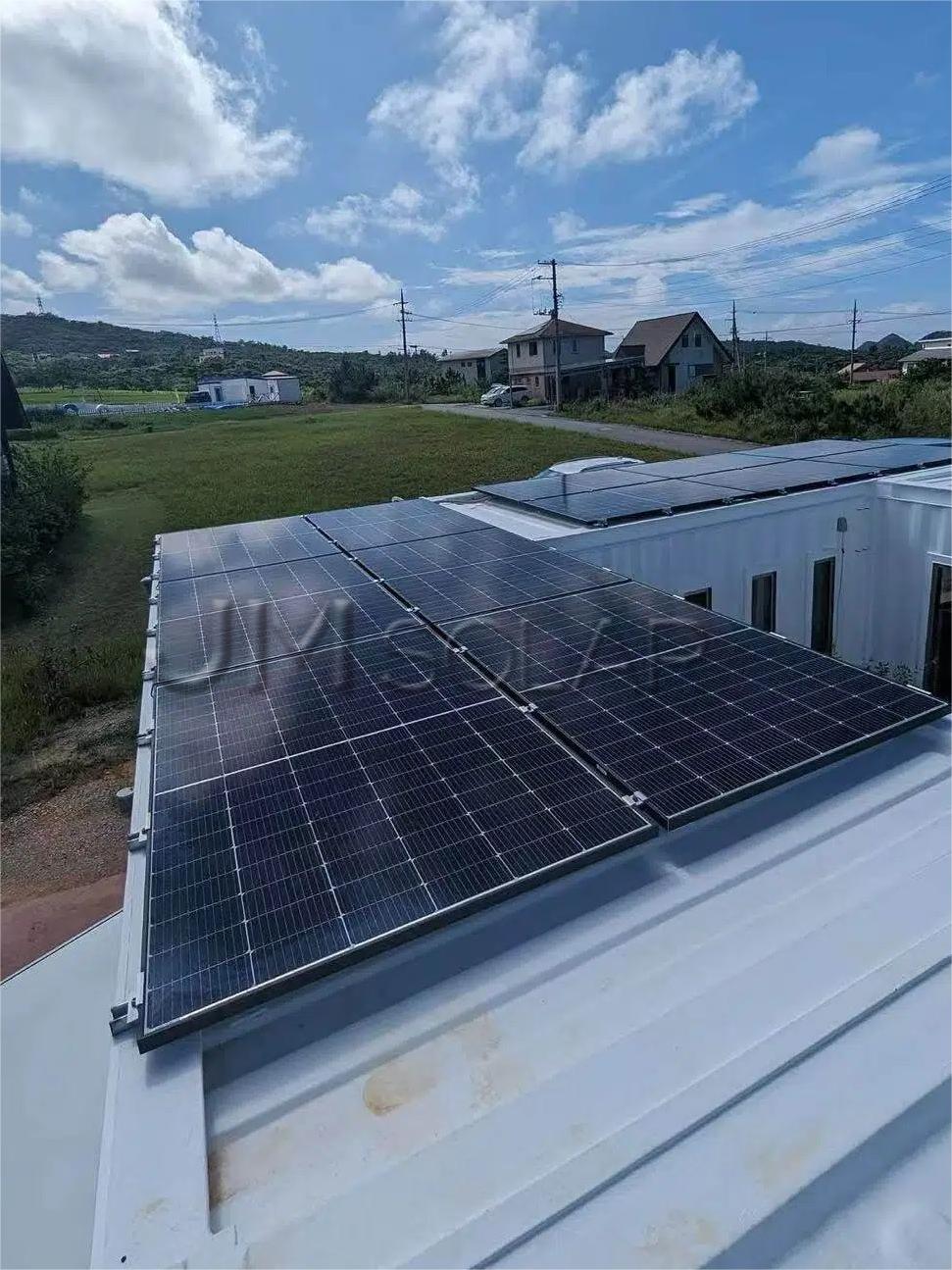
We’re pleased to share a new rooftop solar project completed in Ishigaki Island, Okinawa, Japan. With a total installed capacity of 12.35 kW, this system uses JinMega’s rooftop mounting solution, helping deliver stable solar generation in a coastal island environment.


·A streamlined structure helps speed up installation and makes better use of rooftop space, keeping the project running smoothly.

·Designed to adapt to different roof types and layouts, offering practical solutions for various on-site conditions.

·Built with a strong and reliable structure, ensuring stable, long-term performance in outdoor environments, including coastal areas.


This project shows how JinMega rooftop solutions work across diverse environments while providing reliable solar support for both residential and commercial applications. Learn more about JinMega Rooftop Mounting Systems: https://www.jinmegasolar.com

Do I Need to Use the Grounding Screw?

In solar mounting systems, safety and electrical performance matter just as much as structural strength. One small but key part often mentioned during installation is the grounding screw. Many installers and project owners wonder if using a grounding screw in a photovoltaic system is really necessary.

solar ground screw racking system

A grounding screw helps create a solid electrical connection between metal parts and the grounding system. Since mounting rails, modules, and brackets are usually metal, they can carry electricity. If there’s a problem like insulation failure or a short circuit, these parts might become energized. The grounding screw directs that unwanted electricity safely into the ground, lowering the chances of electric shock or damage.

In most situations, grounding screws are not just recommended—they’re required. Electrical codes and safety rules in many countries say solar mounting systems need proper grounding. This keeps the system safe during normal use and especially when faults or lightning strikes happen. Without the right grounding, the system could be dangerous for people and equipment.

Grounding screws also help keep electrical continuity throughout the whole mounting setup. Solar panel systems include many connected pieces like rails, clamps, and frames. The grounding screw creates a continuous conductive path that allows electricity to flow safely to the ground point. This is especially important in large solar arrays with many panel rows linked together.

These screws also make installation easier. Instead of adding separate grounding wires for every part, installers can use specially made screws to bond metal components directly. This saves time and keeps the system neater. Many modern mounting setups include built-in grounding features to streamline this.

Manufacturers like SIC Solar design their photovoltaic mounting systems with grounding solutions built in. Using compatible grounding screws and parts helps installers meet safety standards and keep installation straightforward. Well-designed mounting structures can improve both electrical safety and mechanical stability.

Long-term reliability is another factor. Grounding screws are usually made from corrosion-resistant materials so they maintain a good electrical connection over time. Since solar systems face outdoor conditions for many years, using quality grounding parts helps avoid problems like loose connections or higher resistance.

Sometimes other grounding methods may be used depending on system design and local rules. Still, grounding screws remain one of the most common and effective ways to bond solar mounting components. Deciding to use them should always be based on system needs, safety standards, and installation guidance.

Do Solar Roof Mounts Damage the Roof?

As rooftop solar becomes more common, many wonder if the mounts will damage their roofs. Since these mounts connect directly to the roof, it's important to understand how they work and if they pose any risks.

solar panel mounts for shingle roof

Generally, properly installed solar mounts don’t harm the roof. In fact, a good installation can protect parts of the roof by shielding them from sun, rain, and temperature changes. The real issue is how well the system is installed and the quality of its parts.

Solar mounts attach panels to different roof types like tile, metal, or flat roofs. On pitched roofs, installers usually fix hooks or brackets to the rafters under the roof. These spots are sealed carefully to avoid leaks. When done right, the roof stays waterproof.

Drilling into the roof for mounts can be a concern, but professionals use flashing and seals to keep water out. High-quality systems are built to stay watertight over time.

Some roofs allow for non-penetrating mounts. For example, standing seam metal roofs can use clamps that attach without drilling, and flat roofs often use weighted systems that hold panels down without roof penetration, lowering damage risk.

Load distribution matters too. Mounts spread the panel weight evenly so no spot gets overloaded. Roofs are checked before installation to make sure they can handle the extra weight.

Using durable parts is key. Brands like SIC Solar make mounts designed to last and resist weather, fitting various roofs while keeping everything stable and sealed.

Poor installation, however, can cause leaks or damage, so it’s crucial to hire experienced installers who use certified materials and follow proper steps.

In short, solar mounts are made to work safely with roofs. When installed well, they don’t cause damage but provide a secure, lasting way to support rooftop solar systems while keeping the building intact.

How Long Do Ground Screws Last?

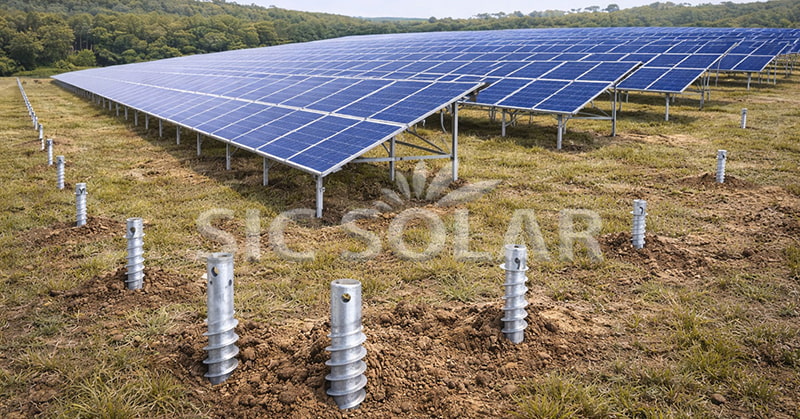
In solar ground mounting systems, having a durable foundation is key to keeping things stable and working well over time. Ground screws have become a popular choice instead of traditional concrete foundations. Still, many developers and installers want to know how long these screws last under real conditions.

ground screws for solar mounting

Typically, ground screws are built to last about 25 to 30 years or even longer, which fits with how long most solar panels are expected to work. Since solar projects usually run for decades, the foundation needs to support the system consistently throughout its life.

One big factor in how long ground screws last is the material. Most are made from strong steel and coated with hot-dip galvanization. This coating prevents rust by creating a layer between the steel and the environment. In regular soil, galvanized ground screws can hold up structurally for many years.

The environment also affects their lifespan. In neutral soil with moderate moisture, corrosion happens slowly, so screws can reach their expected life. But in harsher places—like near the coast with salty air or in acidic soil—corrosion may speed up. There, thicker coatings or extra protection might be needed to keep them durable.

How the screws are installed and the soil type matter too. Good installation means the screw is placed at the right depth and stays stable. If it’s installed wrong—shallow or misaligned—it might wear out sooner or not perform well. So, having professionals do the installation and proper engineering design is important to get the longest life.

The load and structure design also play a role. Ground screws must be chosen based on the weight of the solar setup and environmental forces like wind or snow. When designed well, the foundation handles these loads evenly, which lowers stress on parts and helps the foundation last longer.

Ground screws don’t need much maintenance compared to other foundations. Since they go below ground, they are less likely to get damaged. Still, it’s a good idea to check the above-ground connections and mounting parts every now and then to keep the system secure.

It’s also important that ground screws match well with the solar mounting system. Companies like SIC Solar make structures that fit perfectly with ground screws, which helps keep everything connected tightly and reduces mechanical issues over time.

Overall, ground screws have shown to be a strong and reliable foundation for solar projects. With good materials, proper protection against corrosion, and correct installation, they can provide steady support for solar systems over many years, matching the lifespan expected from modern solar setups, including those using SIC Solar mounting products.

How to Choose the Right Tilt Angle for Your Solar Mounting System |Art Sign

When designing a solar mounting system, many people ask the same question: what is the best tilt angle for solar panels?


In fact, there is no single answer. The best angle depends on several factors, such as latitude, local weather, snow, rain, and wind conditions. Choosing the right tilt angle can help increase power generation and protect the solar system for many years.


At ART SIGN, we have more than 20 years of experience in solar mounting solutions. Here are some basic rules that can help you choose the right tilt angle.


1. The Latitude Rule
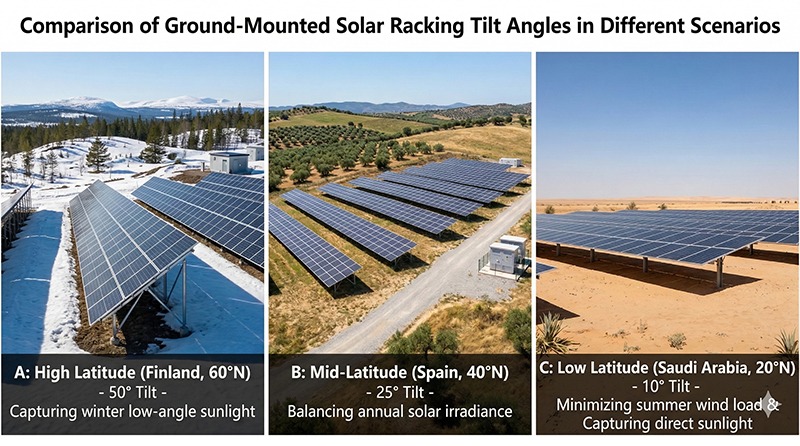
The simplest way to choose a tilt angle is to look at the latitude of the installation location. In many cases, the tilt angle is close to the local latitude.
For example:
Low latitude areas (near the equator):Countries in Southeast Asia, Africa, or South America usually use 5°–15° tilt angles, because the sun is high in the sky most of the year.
Middle latitude areas:Many solar projects in countries such as Spain, Turkey, the southern United States, or China often use 20°–30° tilt angles.
High latitude areas:In places like Northern Europe, Canada, or the northern United States, the sun is lower in winter, so a steeper angle of 35°–45° is often used.

Using the correct tilt angle can help solar panels receive more sunlight throughout the year.


2. Snow and Rain Conditions
Weather also plays an important role when choosing the tilt angle.
Snowy areas:If a solar project is located in regions with heavy snow, a steeper tilt (usually above 35°) is recommended. This helps snow slide off the panels more easily and reduces pressure on the solar mounting structure.

Rainy or dusty areas:Even in warm regions, a minimum tilt of about 10° is recommended. If the panels are completely flat, rainwater and dust may stay on the surface. Over time, this can reduce power generation. A small tilt allows rain to wash the panels naturally.


3. Wind and Structural Safety
While a larger tilt angle can improve sunlight exposure in some regions, it also increases wind load.

Solar panels with large tilt angles can act like a sail during strong winds. In windy areas or coastal regions, engineers sometimes choose a slightly lower tilt angle to improve system stability and reduce structural cost.


 solar-mounting-tilt-angle-comparison


4. Flexible Angle Solutions from ART SIGN
In some projects, customers want the ability to adjust the solar panel angle based on different seasons or installation conditions.
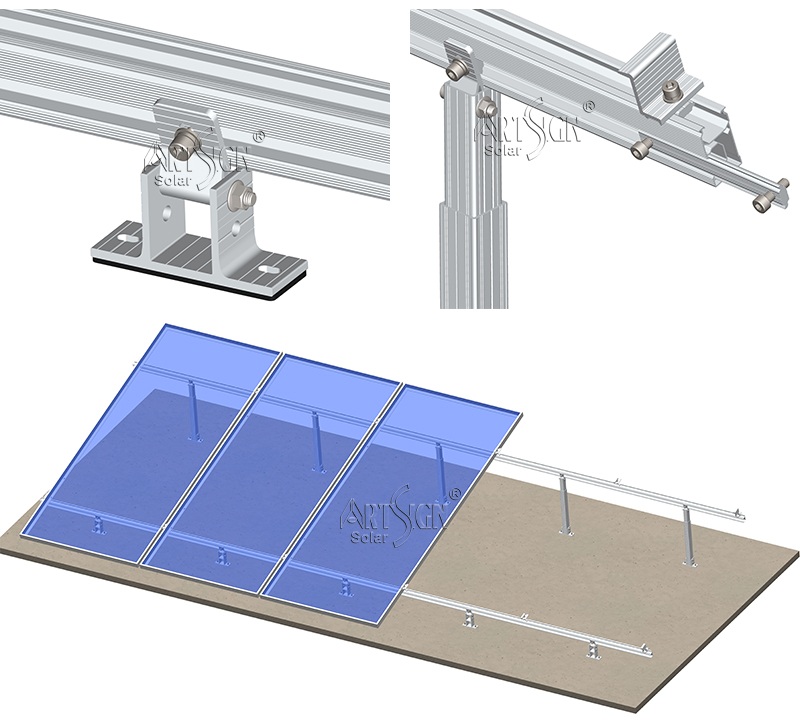
To meet this demand, ART SIGN provides adjustable solar mounting systems with adjustable tilt kit. This design allows installers to easily change the tilt angle of the solar panels during installation. It offers greater flexibility and helps optimize energy production for different locations.
These adjustable solar mounting brackets are widely used for rooftop and ground solar projects, especially where customers want a simple and flexible installation solution.


adjustable-solar-mounting-bracket

Choosing the right tilt angle is an important step in designing an efficient solar mounting system. The best angle depends on latitude, snow, rain, and wind conditions.

With the right design and mounting solution, solar panels can generate more electricity and last longer.

If you are planning a solar project and need professional solar mounting solutions, the ART SIGN team is ready to help you find the best system for your project.

For any inquiry for best solar panel structure, please contact us, E-mail: sales@artsign.net.cn, Whatsapp / Wechat Skype: +86 18030235875, thanks