Gaobo Attend Enlit Asia 2025 Powering the Future of Energy in Bangkok

Enlit Asia 2025: Powering the Future of Energy in Bangkok


Guangzhou Gaobo Electromechanical Co.,Ltd attend Enlit Asia 2025 in Bangkok Thailand during 9th to 11th 2025.

Booth: No.206, Hall EH 104.


Enlit Asia 2025, one of the most anticipated energy events in the region, will take place in Bangkok, Thailand, bringing together industry leaders, innovators, policymakers, and stakeholders to explore the future of power and energy. This premier exhibition and conference will showcase the latest technologies, trends, and solutions shaping the energy sector across Asia.  


With a focus on sustainability, digitalization, and grid modernization, Enlit Asia 2025 will feature cutting-edge exhibitions, expert-led sessions, and networking opportunities designed to foster collaboration and drive innovation. Attendees can expect to gain insights into renewable energy integration, smart grid technologies, energy storage, decarbonization strategies, and the role of digitalization in enhancing grid resilience and efficiency.  


Guangzhou Gaobo Electromechanical Co.,Ltd is located in the Huangpu District, Guangzhou City, Guangdong Province, China. Established in 2008. Passed ISO9001 quality management certification and ISO14001 environment management certification and ISO45001 occupational health and safety management certification.


Professional Engineer Team has focus on the field of different type of high/low voltage Cabinet, PLC electrical control cabinet, Switchgear Cabinet more than 17 years. It specializes in providing intelligent power distribution solutions and service. Our product has been widely used in State Grid, New infrastructure(Data centers, New energy vehicle charging facilities), Rail transit, Construction real estate, Industrial parks.


Our Company has obtained 16 independent intellectual property rights and established long-term cooperation famous brand in the world. Such as Siemens, Schneider, ABB. 

Specialized product is Schneider Prisma E switchgear, Siemens SIVACON 8PT Switchgear. 


Gaobo brand focus on providing high-quality products and development design and scientific management.  We are looking for the ability team or company for long-term cooperation in different countries.

Low voltage electrical panels in Thailand

How to Choose the correct Low Voltage Switch Board Cabinet for Your Industrial application

How to Choose the correct Low Voltage Switch Board Cabinet for Your Industrial application


1.Understanding Key Standards for Low Voltage Switchgear:
Current Rating
    Select the appropriate current rating based on load requirements
    Ensure equipment complies with international standards such as IEC 61439
✔ Technical Specifications
     Confirm the equipment suits your industrial environment
     Consider electrical protection, control functions, and smart monitoring systems

  • Selecting industrial low voltage switchgear
  • #
  • Technical specifications for industrial switchgear


2. Key Factors in Choosing the Best Switchgear
Safety Considerations
  Ensure compliance with local safety standards
  Consider overload and short-circuit protection features
 Maintenance and Reliability
  Select equipment that is easy to maintain and manage
  Understand the manufacturer's after-sales service support


3.  Customizing Switchgear for Your Industrial Application
 Customization Options
   Choose protection levels that meet specific environmental requirements
   Optimize equipment to suit unique industrial scenarios
 Connectivity Features
  Consider connecting switchgear to IoT systems
  Achieve remote monitoring and fault diagnosis capabilities


4. Seeking Expert Advice and Support
 Expert Advice
   Consult professional engineers for insights and customized solutions
   Choose a manufacturer with a good reputation and reliability
 Lifetime Value
   Consider long-term performance and sustainable investments
   Select low voltage switchgear with value in mind


Conclusion: Ensuring Industrial Operations Stability

1、The intelligent selection of low voltage switchgear directly impacts the stability and efficiency of your industrial operations.

2、By choosing standard-compliant equipment, prioritizing safety and reliability, seeking professional support, and conducting regular maintenance, you ensure the reliability and long-term operation of industrial applications.

Request a Quote? → Contact Us

How to Choose the Right Electrical Cabinet for Your Project

When you're working on an electrical project, whether it’s for a data center or an industrial site, picking the right electrical cabinet is really important for safety and performance. Here are five things to keep in mind when you’re looking at switchgear cabinets.


1. Know Your Voltage Needs

First off, figure out if you need a high-voltage or low-voltage cabinet. High-voltage cabinets are more for power transmission, while low-voltage ones are better for local distribution and building systems.


2. Keep Safety and Standards in Mind

Make sure the cabinet meets safety standards like IEC and GB. It's also good to check if it comes from a manufacturer with certifications such as ISO9001 and others. Suppliers like Guangzhou Gaobo Electromechanical Co., Ltd. are good options because they stick to these guidelines.


3. Think About Custom Options

Not all projects are the same, and sometimes you need something a bit different. Look for custom options like PLC control cabinets or specific switchboards to get the designs, features, and space arrangements that work best for you.


4. Check the Supplier's Background

Go for a manufacturer that has been around for a while. Companies like Gaobo, which has over 17 years of experience and works with big brands like Siemens and Schneider, usually offer solid expertise and reliable products.


5. Make Sure You Get Good Support

After-sales service is just as crucial as the product itself. Gaobo provides 24/7 support, engineering help on-site, and all the technical documentation you might need, which can really help keep your project on track.


Getting the right switchgear cabinet or PLC control system is essential for the safety and success of your project. With quality and support in mind, Gaobo can be a reliable partner in your electrical cabinet needs.


Introducing the Sivacon 8PT A Next-Generation Low-Voltage Switchgear Solution

In today’s fast-evolving industrial and infrastructure landscape, power distribution systems must deliver reliability, safety and efficiency. That’s where the Siemens Sivacon 8PT low-voltage switchgear board steps into the spotlight. Engineered for modern factories, building complexes and infrastructure projects, it offers a compelling combination of robust design, flexibility and performance.


Energy Efficient 8PT Low Voltage Switchgear


Why Choose Sivacon 8PT?

  • High performance & trusted brand heritage
    Developed by Siemens, a global leader in electrical distribution systems, the Sivacon 8PT platform has proven its value across complex industrial installations.
  • Compact, modular design suited to today’s applications
    The system supports rated voltages at 380 V / 400 V / 415 V (Un) and rated insulation voltages at 800 V / 1 000 V depending on the cabinet type. 
  • Flexible busbar and compartment configuration
    With options like FCB, OFW, PFC and CCS cabinets, it adapts to a wide range of power-distribution tasks. 
  • Robust safety features
    Door locks and hinges tested for arc resistance, wide-angle door openings (180° single-cabinet, >140° combined-cabinet) for easy access. 
  • Wide protection levels and current ratings
    Protection levels from IP30 to IP41 and busbar rated currents from 1 600 A up to 6 300 A to meet diverse power loads. 


Typical Applications

  • Industrial manufacturing plants with heavy motors, drives and complex feeder networks
  • Commercial or infrastructure buildings requiring centralized power distribution
  • Renewable or smart-grid enabled sites requiring modular switchgear
  • Critical facilities like data centers and hospitals where downtime must be minimized


What “Certificated” Means for You

The listing on Gaoboele highlights “Certificated Sivacon 8PT Low Voltage Switchgear Board With Best Discount Price,” which means:

  • Proper certifications are available (to be confirmed with supplier)
  • Competitive pricing enables cost-efficient procurement
  • Customization options such as color, port of shipment and lead time (~30 days)


Key Specification Summary

Parameter Value
Rated Voltage (Un) 380 V / 400 V / 415 V
Rated Insulation Voltage (Ui) 800 V / 1 000 V
Rated Frequency 50 Hz
Main Busbar Rated Current 1 600 A – 6 300 A
Protection Level IP30 / IP31 / IP40 / IP41
Origin Guangdong, China
Lead Time Approx. 30 days


How to Integrate This Product into Your Project

  1. Define your power-distribution topology: incoming line, bus coupler, feeder panels, motor control centers, etc.
  2. Match rated currents and busbar sizes to ensure system capacity headroom.
  3. Consider layout & accessibility with wide-angle door openings.
  4. Choose appropriate IP rating for environmental conditions.
  5. Leverage customization such as color and configuration options.
  6. Verify certification (e.g., CE, IEC 61439) with supplier before procurement.


Why This Product Matters for Your Business

  • Reliability = Uptime: A proven Siemens-heritage system reduces failure risk and ensures stable operation.
  • Scalability: Modular design allows expansion as demand grows.
  • Cost-effectiveness: Reduced downtime and easy servicing minimize maintenance costs.
  • Safety & Compliance: Tested door systems, arc-resistant design and certifications ensure safety and standards compliance.


Final Thoughts

If you’re specifying a reliable, flexible low-voltage switchgear board for industrial or infrastructure applications, the Sivacon 8PT from Gaoboele offers an outstanding solution. It combines Siemens-heritage engineering, modular flexibility, strong safety performance and competitive pricing — helping your projects stay efficient and future-ready.

Click here to learn more or request a quote →


Maintaining and Using Low Voltage Switchgear board Best Practices for Safety and Performance

Low Voltage Switchgear board (LVS) forms the core of industrial power distribution systems. To ensure seamless operations, safety, and longevity, consistent maintenance and proper usage are vital. Our expertise as a leading manufacturer equips us to provide top-tier maintenance services and usage guidelines.


1. Professional Maintenance Services

✔ Key Maintenance Checks

  • Thermal Imaging Scans
  • Circuit Breaker Testing
  • Insulation Resistance Test
  • Busbar & Connection Tightening

Recommended: Every 6 months for tough environments.

✔ Predictive Maintenance with Smart Monitoring

Upgrade to our SmartGuard IoT System for real-time insights.


2. Safety & Usage Guidelines

Environmental Conditions

  • Operating Temperature: -5°C to +40°C
  • Humidity: Max 95%
  • Altitude: Up to 2000m

⚠️ Avoid These Actions

❌ Don't bypass interlocks

❌ Avoid mixed metals

❌ No live work


3. Troubleshooting Common Issues

Symptom Possible Cause Solution
Overheating Dust buildup/Overload Clean vents, reduce load
Tripping Breaker Short circuit/Settings Check settings, test trip unit
Humming Noise Loose parts/Vibration Tighten bolts, inspect coils


4. Added Services for Reliability

  • Free Benefits
  • 3D Wiring Diagrams
  • Annual Energy Efficiency Report

Premium Upgrades

Silver-Plated Busbars

Seismic Reinforcement Kits


Ensuring Continuity with Expert Care


Proactive maintenance reduces failures by 60% and extends switchgear life by 30%+. We offer quick response, tailored schedules, and backup services.


Request a Quote? → Contact Us

Siemens SIVACON 8PT Low-voltage Switchgear introduction from GaoBo manufacturing company

Introduction to Siemens SIVACON 8PT Low-Voltage Switchgear


The Siemens SIVACON 8PT** is a high-performance "low-voltage switchgear" system designed for "power distribution, motor control, and energy management in industrial and commercial applications. It offers modularity, safety, and reliability, making it suitable for a wide range of electrical installations.  


Key Features: 

- Modular design for flexible configurations (fixed or withdrawable units).  

- High short-circuit resistance (up to 100 kA).  

- Advanced protection & monitoring with integrated communication (e.g., PROFIBUS, Ethernet).  

- Compact and space-saving construction.  

- Compliance with IEC 61439 standards.  


Applications:

- Industrial plants(manufacturing, automation).  

- Commercial buildings (hospitals, data centers, offices).  

- Infrastructure projects (airports, railways, power stations).  

- Renewable energy systems(solar/wind farms).  


The SIVACON 8PT ensures efficient, safe, and future-proof power distribution, supporting smart grid and Industry 4.0 requirements.  


Would you like more details on specific configurations or technical specs?

What is the low voltage Switchgear board and how to find good manufacturer?

What is the low voltage Switchgear board?

Low voltage switchgear refers to a crucial electrical apparatus used for controlling, protecting, and isolating electrical equipment when the voltage is below a certain level. These systems ensure the smooth functioning of electrical networks and prevent damage caused by power fluctuations. Invest in reliable low voltage switchgear solutions for enhanced safety, efficiency, and performance of your electrical systems. Upgrade to high-quality low voltage switchgear for optimized power management and peace of mind.

How to find the best low voltage switchgear board manufacturing company?

For low voltage switchgear famous brand such Siemens, Schneider... They will Authorize to some long-term cooperation manufacturing company in different countries. They must pass through strictly quality and safe and production scale inspection. 

For Example, Siemens 8PT Low voltage Switchgear Board, Siemens 8PT Low Voltage Switchgear Authorized Manufacturer is a specialist designated by Siemens to produce and distribute the 8PT series of low voltage switchgear. These manufacturers are licensed by Siemens to ensure the highest quality standards and compatibility with Siemens' products, providing reliable solutions for various electrical systems.

Gaobo have Siemens and Schneider authorized manufacturing certification. also got ISO9001, ISO14000 certification.

Types of Solar Mounting Systems Explained

Solar mounting systems are super important because they keep solar panels safe and working great for years. While the panels grab sunlight, these mounts hold them steady against rain, wind, and all sorts of weather. Knowing about different types of mounting systems helps people installing them pick what works best for each spot. Companies such as SIC Solar has a bunch of choices for different roofs and grounds.

1. Roof Mounts

These are used the most, mainly for houses. They use rails, hooks, or clamps to stick panels right onto the roof.

Pitched Roof Mounts: These work well for roofs made of tile, shingles, or metal. Parts like roof hooks let you put them on without wrecking the roof.

Flat Roof Mounts: These often use frames that are weighted down. Since these don't need holes in the roof, they are liked for businesses.

2. Ground Mounts

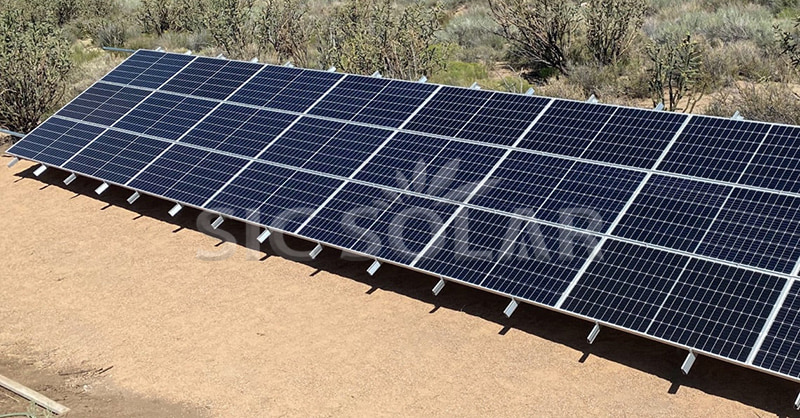
If there's not a lot of roof space or the panels would be in the shade, ground mounts are a good choice. Panels go on frames made of steel or aluminum that are held down with screws or concrete. Ground mounts are simple to take care of and good for big properties or big projects. SIC Solar makes tough ground mounts that can handle different grounds and snow.

solar ground mounting systems

3. Pole Mounts

Pole mounts put panels up high on a pole, away from plants, snow, or water. They're often used where there's no regular power. Some can be changed by hand so you can tilt them to get more sunlight at different times of the year.

4. Tracking Systems

Tracking mounts move with the sun to get as much power as possible.

Single-Axis Trackers turn from east to west.

Dual-Axis Trackers follow the sun every day and through the seasons. They cost more, but can really up the power in sunny places.

5. Floating Solar Mounting Systems

More and more folks are using floating solar, which puts panels on platforms that float on water like ponds or lakes. This saves land and cuts down water loss. These systems need special floating stuff and parts that don't rust.

Every kind of solar mount has its own use, and what you pick depends on the roof, ground, shade, how much money you have, and your project goals. With good sellers like SIC Solar providing mounts that can be changed and last, installers can find the right system for any job.

Can Solar Panels Be Ground Mounted?

Yes, solar panels can be ground mounted, and in many situations, this setup offers major benefits. A ground-mounted solar system uses supporting frames or structures installed directly on the ground instead of the roof. This type of installation is often chosen when the roof space is limited, shaded, or not suitable for supporting solar panels.

ground mounted solar installation

Ground-mounted systems are typically installed on open land with good sunlight exposure. The mounting structures are usually made of aluminum or galvanized steel, which ensures strength and corrosion resistance. Panels are attached to the racks at an optimized tilt angle and direction to capture maximum sunlight. Because the system is not restricted by roof shape or angle, installers can achieve the best orientation for energy production.

There are mainly two types of ground mounting: fixed-tilt systems and adjustable or tracking systems. Fixed-tilt systems are stable, cost-effective, and easy to install. Tracking systems can follow the sun’s path automatically, improving electricity output but at a higher cost.

One of the main advantages of ground mounting is easy maintenance. Since the panels are accessible from the ground, cleaning and inspection are more convenient compared to roof-mounted systems. The open structure also allows good airflow beneath the panels, which helps to prevent overheating and maintain efficiency.

However, ground-mounted systems require adequate space and suitable soil conditions. Installers often use ground screws or concrete foundations to secure the structure and resist wind or snow loads. For uneven or rocky ground, special designs may be needed to ensure stability.

Companies like SIC Solar, a manufacturer specializing in photovoltaic mounting systems, provide a wide range of durable and flexible ground mounting solutions. Their systems are designed for quick installation, long service life, and compatibility with various terrains and climates.

Ground-mounted solar panels are especially suitable for commercial sites, farms, and large residential properties. They can even be used in agri-solar setups, where solar arrays share land with agricultural activities.

While roof-mounted systems are more common in cities, ground-mounted ones offer scalability and efficiency advantages for open areas. With well-designed mounting structures from SIC Solar, ground-mounted systems can deliver stable performance and reliable renewable energy for years.

Do Solar Panels Have to Be Installed Carefully to Match the Roof Tilt?

Yes, the tilt of a roof plays a significant role in the performance of solar panels, and careful installation is essential to maximize energy production. The angle at which panels are mounted affects how much sunlight they receive throughout the day and across seasons, which directly impacts the overall efficiency of the system.

adjustable solar tilt mount

For pitched roofs, solar panels are often installed following the natural slope of the roof. If the roof tilt is close to the optimal angle for the location’s latitude, panels can be mounted directly using flush mounts or roof hooks. However, if the roof angle is too shallow or too steep, the installation may require adjustable tilt brackets to ensure panels face the sun effectively. Proper alignment ensures panels capture maximum sunlight while avoiding unnecessary shading between rows of panels.

Flat or low-pitch roofs require extra attention. Since these roofs do not have a natural angle, panels are mounted on tilt frames or ballasted systems to achieve the desired slope, usually between 10° and 30°. These mounts not only improve energy generation but also allow rainwater to run off, reducing debris accumulation and keeping panels clean. Manufacturers like SIC Solar, known for producing high-quality photovoltaic mounting systems, provide tilt solutions for both pitched and flat roofs. Their systems are designed for easy adjustment, stability, and long-term durability, making installation safer and more efficient.

Properly considering roof tilt also helps with wind resistance. Panels installed at an improper angle may experience higher uplift forces during storms, which can damage both the panels and the roof. High-quality mounting systems are engineered to distribute weight evenly and withstand wind loads, ensuring safety even in harsh weather conditions.

Another advantage of careful tilt installation is seasonal optimization. Some installations allow minor adjustments to the tilt throughout the year. In winter, a steeper angle helps capture sunlight when the sun is lower in the sky. In summer, a shallower tilt prevents overheating and maintains optimal efficiency.

Roof tilt also affects aesthetics and space usage. Panels aligned neatly with the roof slope look more integrated and can prevent shading of adjacent modules, maximizing usable area. Cable management and grounding must also be carefully planned to match the panel layout and maintain safety standards.

While the tilt of the roof is important, selecting a reliable and well-designed mounting system ensures that panels are installed securely and positioned for optimal performance. Companies like SIC Solar produce mounting solutions that adapt to various roof angles and materials, including tile, metal, and asphalt shingle roofs. Their systems simplify installation while maintaining durability and energy efficiency, ensuring that panels remain stable and productive for years.

Careful installation that considers roof tilt is essential for long-term solar performance, safety, and efficiency, making high-quality mounting solutions a critical part of any solar project.