Wind Load Requirements for Ground Mounting Systems

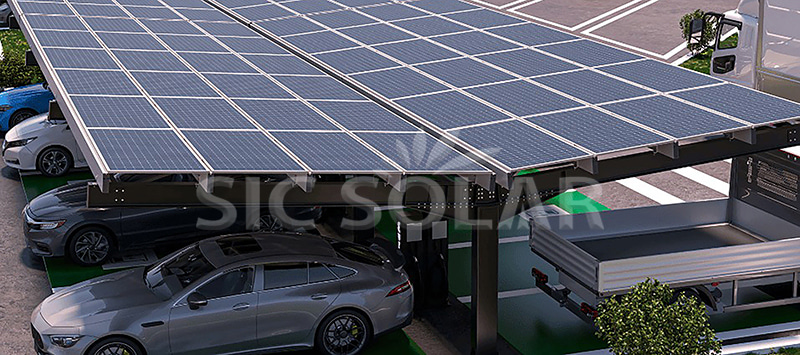
When you're setting up a solar project on the ground, one of the main things to consider is how strong the wind gets. Big gusts can lift, shake, and put stress on everything, so your mounting system needs to be up to par with local rules and what engineers say. Companies like SIC Solar, who make and sell solar panel mounting gear, build their stuff to handle all sorts of windy weather in different spots.

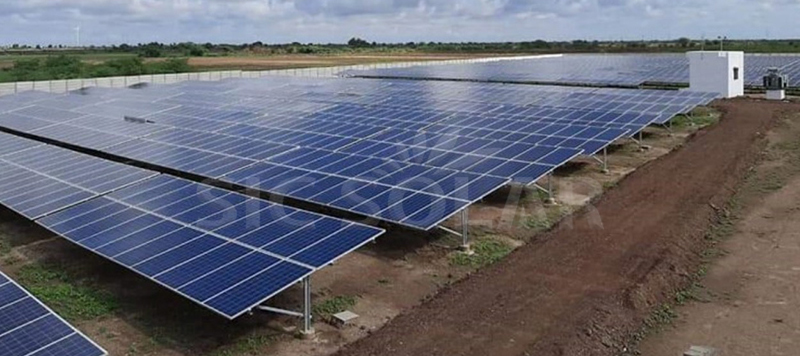
solar panels mounted on the ground

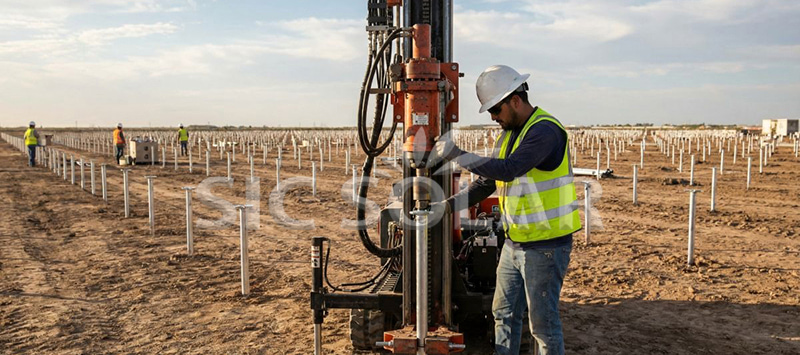
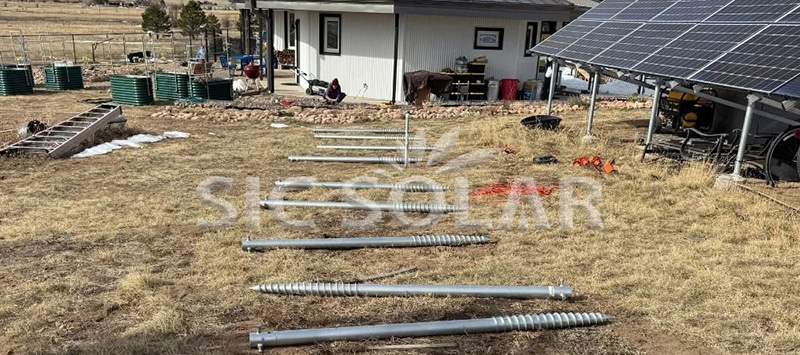
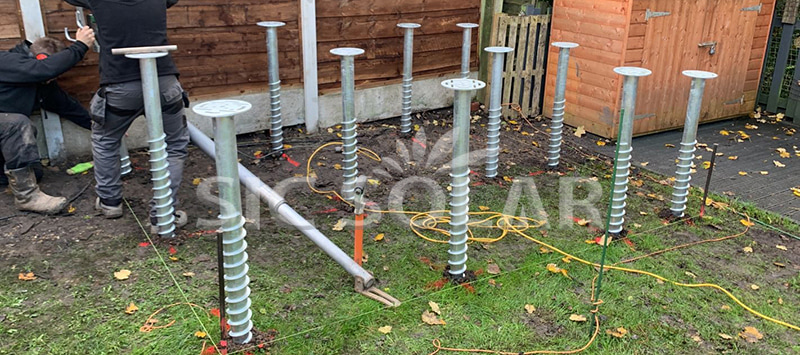
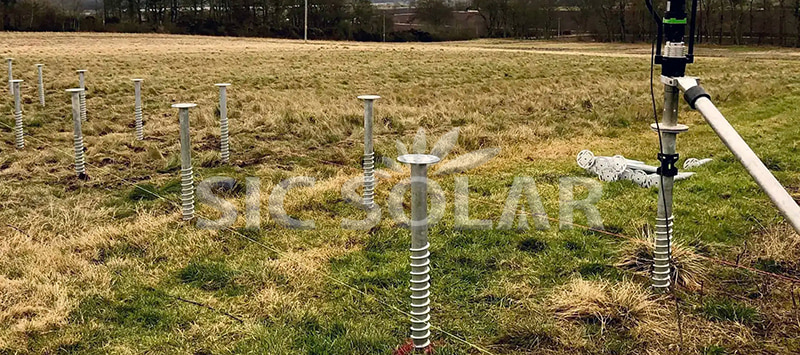
What you need for wind depends on where you are, what the land is like, how high you're putting things, and how much your panels are tilted. Places near the coast or out in the open usually get more wind, so your setup has to be stronger with bigger posts, deeper bases, or tougher beams. The ground type also matters. If it's rocky, you might need to drill for the base; if it's soft, you might need concrete to keep things steady.

The shape of your system also plays a big part. How much your panels are tilted changes how much wind they catch. If they're tilted up a lot, they grab more wind, so your setup needs to deal with that extra lift. If they're tilted low, they don't catch as much wind, but you might still need extra support. How far apart the rows are matters too, because if they're too close, it can mess with the wind flow and cause problems.

It's super important to have the right papers and meet the rules when you're doing solar stuff now. A lot of places use codes like ASCE, Eurocode, or their own wind maps to figure out what kind of load to plan for. Ground mounting sellers use these directions to figure out how strong to make things and test their systems. Companies like SIC Solar usually give you facts, wind ratings, and help from engineers to make sure installers stay safe.

What things are made of also affects how they handle wind. Steel ground mounts are great for places with crazy wind, while aluminum ones work in spots with okay wind where you don't want rust. The base you use—whether it's concrete, hammered posts, or ballast—has to match the wind you expect, so things don't move or lift up over time.

Understanding what you need for wind makes sure your setup lasts and stays safe, especially for big solar farms on the ground. Good planning, reliable stuff, and suppliers you can trust help keep the whole thing stable no matter what the weather throws at it.

Solar Roof Mounting Adjustable Tilt Kit Advantages for Flat Roof and Metal Roof |Art Sign

Maximizing the use of solar energy depends not only on the number of solar panels, but more importantly on making existing solar panels work more efficiently. For customers who want to absolutely utilize their solar energy systems, fixed solar roof mounting systems have certain limitations, but Art Sign solar roof mounting brackets adjustable tilt kit can effectively overcome these limitations. This adjustable tilt kit gives you the flexibility to manually adjust your panel's angle, aligning them perfectly with the sun's position.


Design Feature:
1)Suited for concrete flat roof and metal roof.
2)Adjustable type structure which has 3 angle range for options: 10-15°, 15-30°, 30-45°.

3)All the components will be pre-assembled.


Surface Treatment:
10um thk. Anodized aluminum, stainless steel 304 bolts and nuts.
Design Strength:

2 kinds of design to meet the different wind load and snow load requirements.


adjustable solar roof mount


Key Advantages of Solar Roof Mounting Structure Adjustable Tilt Kit:
1)Adjust tilt angle: the solar altitude angle varies with the seasons, and fixed solar roof mounting can only maintain one tilt angle. However, Art Sign solar panel roof mount adjustable tilt kit can optimize the tilt angle in each season, thereby improving solar energy utilization by 5%-15%.


2)Applications to different roof types: for flat roofs, adjustable solar panel tilt mount brackets can adjust the tilt angle to support solar energy harvesting; for metal roofs, it can increase the tilt angle for more efficient power generation.
3)Cleaning effect: in areas with moderate rainfall, steeper tilt angle can act as a natural cleaner. When it rains, rainwater helps wash away dust, pollen, bird droppings, etc., reducing the need for manual cleaning and minimizing panel energy loss.
4)High corrosion resistance: solar panel tilt kit uses premium high-quality 6005-T5 aluminum and 10µm anodized surface, it offers effective corrosion resistance. With a service life of up to 20-25 years, Art Sign also provides free design and free samples for clients quality comparison.


adjustable solar panel mount


Our solar roof mounting adjustable tilt kit is more than just a simple solar roof mount; it's a strategic investment. It help you to maximize the value of your solar panels throughout the lifespan of your solar system.
For any inquires for solar panels roof mounting system, please feel free to contact us.
E-mail: sales@artsign.net.cn,
Whatsapp / Wechat / Skype:+86-18030235875, thanks.


How to Maintain a Chlor-Alkali Electrolysis Cell?

As an indispensable part of the global supply chain, the operational efficiency of the chlor-alkali industry directly affects the competitiveness of downstream industries. In today's era of high energy costs, optimizing the core of chlor-alkali production - the electrolytic cell - has become a key focus in the industry. The core of the chlor-alkali industry lies in electrolytic cell technology. For existing factories, simple maintenance is no longer sufficient to meet market challenges; proactive upgrading and transformation of electrolytic cells are crucial for enhancing competitiveness. We deeply understand the close relationship between voltage and energy consumption in chlor-alkali production and introduce two levels of professional solutions.


1. Spacing Adjustment: A "Precision Surgery" for Existing Facilities, Rapidly Reducing Costs and Enhancing Efficiency

For operating ion-exchange membrane electrolytic cells, the spacing is one of the core parameters determining energy consumption.

What is spacing adjustment? Spacing adjustment is a precise technology that optimizes and adjusts the electrode spacing to significantly reduce cell voltage while ensuring safety and current efficiency. A slight decrease in voltage can directly translate into substantial energy savings. For a large chlor-alkali plant, a reduction of tens of millivolts in voltage means saving millions of dollars in electricity costs annually. It also increases the output per unit of electricity, achieving energy efficiency improvements.


2. Complete Electrolyzer Replacement : A "Strategic Upgrade" for the Future, Enabling Leapfrog Development

When electrolytic cell technology becomes outdated or when a significant increase in production capacity is needed, complete cell replacement is the fundamental solution.

Complete cell replacement involves replacing old or technologically outdated cells with a brand-new set of the most advanced electrolytic cell units. This can directly upgrade to the current most advanced electrolytic cell model, enjoying the lowest energy consumption per unit of product. New electrolytic cells typically have higher current density, significantly increasing chlor-alkali production capacity and completely eliminating the risk of frequent shutdowns due to equipment aging. New technologies can also provide more stable and higher-purity chlorine, caustic soda, and hydrogen products.

In the fierce global competition, chlor-alkali plants are not only production units but also assets that need continuous optimization.

What are the Differences Among the Four Types of Low-voltage Switchgear, GGD, GCS, GCK and MNS

The main differences among the four types of low-voltage switchgear, GGD, GCS, GCK and MNS:

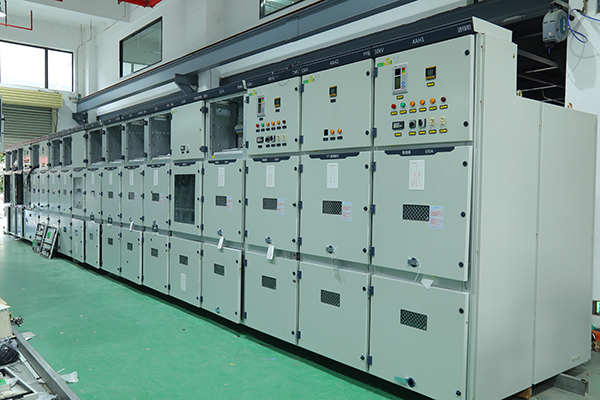
GGD is a fixed cabinet, while GCK, GCS, and MNS are drawer-type cabinets. The GGD cabinet is an older model with lower security but the lowest price, suitable for prefabricated substations. The GCK, GCS, and MNS cabinets use a modular structure, resulting in a smaller, more compact size that facilitates transportation and installation.

The GCS cabinet can only be installed as a single-sided control cabinet with a depth of 800mm, while the MNS cabinet can be installed as a double-sided control cabinet with a depth of 1000mm. The maximum current designed for the GCS cabinet is 4000A, while the maximum current designed for the MNS cabinet is 6300A.

The drawer-pushing mechanisms of GCK, GCS, and MNS differ. GCS uses a rotary push mechanism, while MNS uses a large interlock. GCS can only have a minimum of 1/2 drawer, while MNS can have 1/4 drawer. The GCS cabinet is divided into a busbar compartment, an electrical compartment, and a cable compartment, with each compartment separated by partitions. The MNS cabinet is divided into three functional compartments: a busbar compartment, a drawer compartment, and a cable compartment, with each compartment separated by high-strength steel plates or flame-retardant insulating boards.

The installation modules of GCK, GCS, and MNS differ. GCS can be made with a maximum of 22 drawers, while MNS can be made with 72 drawers. The GCS cabinet has an IP30 and IP40 protection rating, and higher protection ratings can be designed according to requirements. The MNS cabinet has an IP40 protection rating.

The busbars of GCK, GCS, and MNS are different. GCK's horizontal busbar is located on the top of the cabinet, and its vertical busbar lacks a flame-retardant plastic functional panel. Cable exits can be at the rear or in a right-side cable compartment. GCS and MNS's horizontal busbars are at the rear, separated from the front left drawer unit and front right cable exit compartment by a partition. Their vertical busbars are assembled within a flame-retardant plastic functional panel.

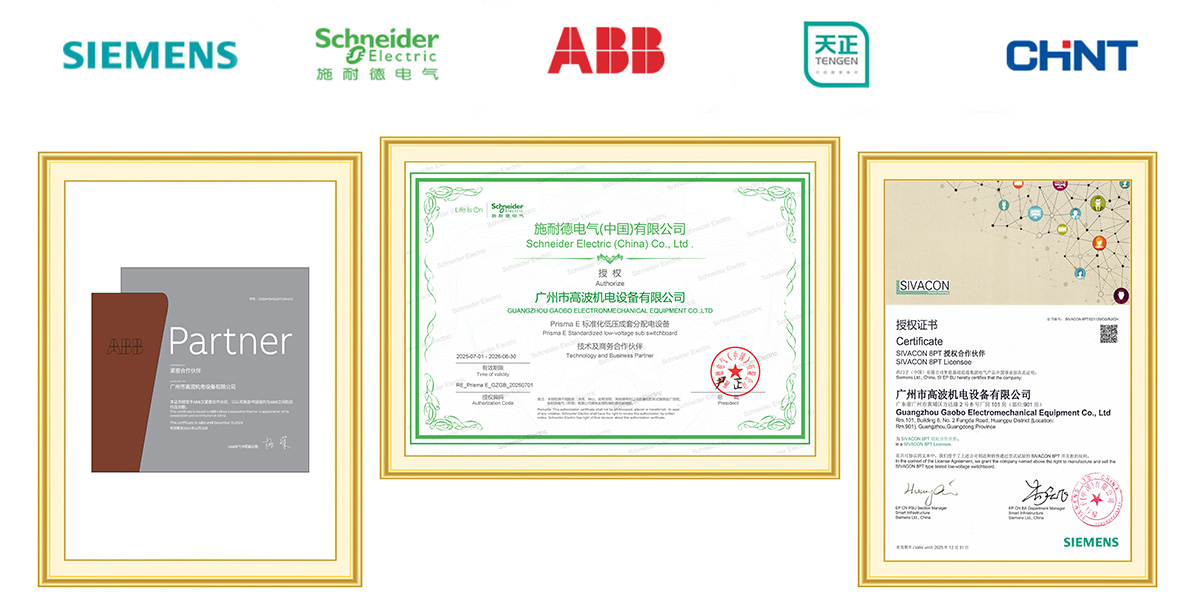
GCS is domestically produced, while MNS is imported. GCS was launched on the market in 1996 and is largely modeled after MNS. MNS is a product manufactured using technology transferred from ABB Switzerland.

The prices differ. GGD is the cheapest. GCS is cheaper than MNS.

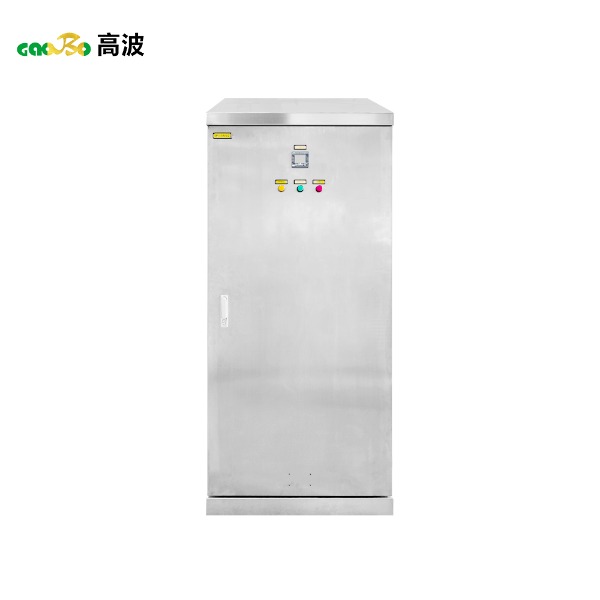
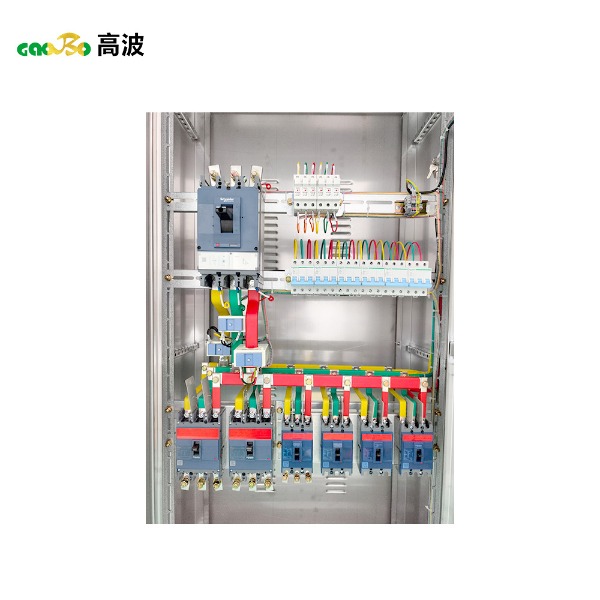
Gaobo Switchgear Factory


When selecting low-voltage switchgear, the following aspects need to be considered:

Installation Environment: Different low-voltage switchgear is suitable for different installation environments. For example, different types of low-voltage switchgear need to be selected for different environments such as power distribution rooms, electrical control rooms, and distribution boxes.

Equipment Requirements: Different electrical equipment requires different switchgear. For example, for equipment such as motors, generators, and transformers, low-voltage switchgear with motor control and power distribution functions needs to be selected.

Protection Performance: The protection performance of low-voltage switchgear is a crucial factor affecting its service life. When selecting low-voltage switchgear, it is necessary to choose one with an appropriate protection level based on the actual conditions of the equipment and the operating environment.

Maintenance and Repair: Maintenance and repair of low-voltage switchgear is also a factor to consider. Different low-voltage switchgear have different maintenance requirements. When selecting low-voltage switchgear, it is essential to understand its maintenance requirements and precautions to ensure proper use and maintenance.


The following are suitable application scenarios for GGD, GCS, GCK, and MNS low-voltage switchgear:

GGD Series: Suitable for AC 50Hz power distribution systems in substations, power plants, industrial and mining enterprises, etc., with a rated operating voltage of 380V and a rated operating current of 1000A-3150A. Used for power and lighting distribution and energy conversion and distribution control.


GCS Series: Suitable for three-phase AC 50Hz power generation and supply systems with a rated operating voltage of 400V (690V) and a rated current ≤4000A. Used for power distribution, centralized motor control, and capacitor compensation. Widely used in power plants, petrochemical plants, metallurgy, textile mills, high-rise buildings, and other locations requiring automation and computer interfaces.

GCK Series: Suitable for AC 50(60)Hz power distribution systems with rated operating voltage ≤660V and rated current ≤4000A. It consists of a power distribution center (PC) cabinet and a motor control center (MCC) cabinet.

MNS Series: Adaptable to various power supply and distribution needs, widely used in low-voltage power distribution systems in power plants, substations, industrial and mining enterprises, buildings, and municipal facilities. Especially suitable for locations with high automation and requiring computer interfaces.

When selecting a switchgear type, factors such as the specific operating environment, electrical parameter requirements, and budget must be considered comprehensively. 

Gaobo Power Solution Factory

If you have any questions about the aforementioned low-voltage switchgear, or related needs, please contact us: Gaobo Electromechanical Equipment Co., Ltd., a company with over 17 years of extensive experience in the power industry.

CONSNANT IP44 Industrial Online UPS A Benchmark for Industrial-Grade Power Safety


As a professional importer and exporter of online UPS power supplies, CONSNANT, with decades of experience in the power supply field and a professional technical team composed of senior engineers, is committed to providing stable, reliable, and efficient power solutions for industrial customers worldwide. Among its flagship products, the CONSNANT IP44 Industrial Online UPS, with its superior performance and precise scenario adaptability, has become the preferred equipment for power protection in the industrial field.


I. IP44 High Protection Rating, Adaptable to Complex Industrial Environments


Industrial production scenarios are often accompanied by problems such as dust and large humidity fluctuations, making it difficult for ordinary UPS power supplies to adapt to such harsh conditions. The CONSNANT IP44 Industrial Online UPS adopts a stringent protection design, meeting the IP44 protection standard, and possesses excellent dustproof and splashproof capabilities. Whether in dusty indoor environments such as machine shops and metallurgical plants, or in outdoor operating environments such as communication base stations and new energy power plants, this product can effectively resist external environmental interference, maintain stable operation, and provide continuous and uninterrupted power support for industrial equipment.


II. Online Double Conversion Technology for Zero-Interruption Power Supply


For industrial production, even millisecond-level power outages can lead to serious consequences such as production process disruptions, damage to precision equipment, and data loss, resulting in significant economic losses. The CONSNANT IP44 Industrial Online UPS features advanced online double conversion technology, which monitors the power grid status in real time. When voltage fluctuations or power outages occur, it can switch from grid power to battery power within zero milliseconds, achieving true uninterrupted power supply. This core advantage ensures the continuous and stable operation of critical equipment such as CNC machine tools, automated production lines, and industrial control systems, minimizing the impact of power failures on production.


III. Intelligent Management and Multiple Protections for Efficiency and Safety


In the trend of intelligent manufacturing, the manageability and safety of equipment are increasingly important. The CONSNANT IP44 Industrial Online UPS has a built-in intelligent battery management system that accurately monitors battery parameters such as voltage, current, and temperature, automatically performing charge and discharge balancing adjustments to effectively extend battery life and reduce maintenance costs. Meanwhile, the product is equipped with a comprehensive protection mechanism, covering multiple functions such as overload protection, short circuit protection, overvoltage protection, and undervoltage protection. It can monitor the circuit status in real time and immediately activate the protection program in case of any abnormality, preventing equipment damage due to power problems and ensuring the personal safety of operators.


IV. Professional Technical Backing, Globally Trusted Quality


CONSNANT has always regarded technological research and development as its core competitiveness. Its professional technical team not only possesses a strong theoretical foundation but also rich practical experience in industrial scenarios. During the development of the IP44 Industrial Online UPS, the team combined the characteristics of industrial power consumption in different regions around the world with customer needs, conducting repeated testing and optimization to ensure that the product achieves industry-leading levels in performance, stability, and compatibility. With its superior quality and comprehensive after-sales service, the CONSNANT IP44 Industrial Online UPS has been exported to many countries and regions worldwide, widely used in numerous industrial fields such as automotive manufacturing, electronics, new energy, and chemicals, winning high recognition and trust from global customers.


From adaptability to harsh environments to zero-interruption power supply, from intelligent management to comprehensive safety protection, the CONSNANT IP44 Industrial Online UPS, with its robust capabilities, builds a solid power safety barrier for industrial production. In the future, CONSNANT will continue to uphold its commitment to technological innovation, further deepen its expertise in the industrial UPS field, and provide global industrial customers with more competitive power solutions, helping enterprises achieve efficient, stable, and safe production operations.


Welcome to inquire:

Shenzhen Consnant Technology Co,Ltd.

Web: www.consnant.com

Why Mid/End Clamps Are Essential in Solar Mounting System |Art Sign

When designing a solar panel mounting system, every component is very crucial, especially the aluminum solar clamps which can be secured solar panels in solar mounting structure. Art Sign mid clamps and end clamps seek like small parts, but they play a vital role in the stability, durability and efficiency in solar mounting system.


What are mid clamps and end clamps in solar mounting brackets?
Surface Treatment: mill sheet, anodized aluminum 6005-T5 sliver or black;
Application: mid clamp fix between 2 solar modules; end clamps are clamping the edge of a solar panel to the mounting rail;

Types: There are a multiple types and sizes for matching installation requirements and suitable for different size solar panels.


solar structure mid clamp


How to choose right mid/end clamp for solar mounting project?
Materials: Art Sign mid/end clamps use high quality aluminum 6005-T5 and anodized 10um, which has better ductility and impact resistance, and can meet the tensile strength and yield strength requirements of most structures.
Security: solar mount clamp connect and secure solar panels, which play an important role in keeping solar panels stable in extreme weather.


Installation: Whether it is universal mid/end clamp or special mid/end clamp, Art Sign's design can be conveniently and easily installed in the solar mounting system to save labor cost and time.
Certificate: Art Sign's mid/end clamps have multiple international certifications to ensure their good quality, including CE, TUV, SGS, etc.


solar panel mid-end clamp


The mid/end clamps may seem insignificant, but it plays a vital role in the entire solar panel mount structure. Art Sign clamps also can make ensures your solar mounting keep efficiency, safe and maintenance-free for 20 years.
For any inquires for solar rooftop mounting system, please feel free to contact us.
E-mail: sales@artsign.net.cn,
Whatsapp / Wechat / Skype:+86-18030235875, thanks.


What is the difference Between Low Voltage and High Voltage Switchgear---Gaobo Power Solution

In the vast and complex world of electrical power distribution, from the local substation to the breaker panel in a building's basement, switchgear plays a critical role. It is the combination of electrical disconnect switches, fuses, and circuit breakers used to control, protect, and isolate electrical equipment. Think of it as the command and safety center for an electrical network. While all switchgear serves this fundamental purpose, the distinction between Low Voltage (LV) and High Voltage (HV) switchgear is profound, impacting their design, application, and safety protocols.


Gaobo Power solution is a pofessional Low Voltage and High Voltage Switchgear Manufacturer in Guangzhou China.

Gaobo LV and HV Switchgear Manufacturer


What is Low Voltage Switchgear?

Low Voltage Switchgear is designed to handle electrical systems where the voltage does not exceed 1,000 volts AC (or 1,500 volts DC). This is the equipment you would find in everyday commercial, industrial, and residential settings. Its primary role is to manage and protect the power distribution downstream, feeding electricity to loads like lighting, motors, and office equipment.

Common components within an LV switchgear assembly include:

Molded Case Circuit Breakers (MCCBs) and Air Circuit Breakers (ACBs): These are the workhorses for interrupting fault currents and overloads.

Contactors: Used for remotely switching loads on and off, often for motor control.

Protective Relays: Monitor electrical parameters and trigger breakers in case of abnormalities.

Measurement Devices: Voltmeters, ammeters, and energy meters for monitoring system health.

LV switchgear is characterized by its compact, metal-clad design, often arranged in a lineup of cubicles. Safety for personnel is maintained through insulation and enclosed housing, but the primary focus is on operational reliability and protecting connected equipment from damage.


What is High Voltage Switchgear?

High Voltage Switchgear is built for the transmission and distribution part of the grid, typically dealing with voltages from 36kV up to 765kV and beyond. Its role is to control and protect high-power circuits and large segments of the electrical network, such as transmission lines, power transformers, and entire substations.

Due to the immense energy involved, the design and components of HV switchgear are significantly more robust and complex. Key components include:

Vacuum or SF6 Circuit Breakers: At high voltages, air alone cannot safely extinguish the electrical arc created when a circuit is interrupted. These breakers use a vacuum or sulfur hexafluoride (SF6) gas to quench the arc effectively.

Disconnect Switches (Isolators): These provide a visible air gap to isolate equipment for maintenance, ensuring a section is completely de-energized.

Current Transformers (CTs) & Voltage Transformers (VTs): These scale down the high current and voltage to measurable values for protection relays and meters.

Advanced Protective Relays: These are highly sophisticated devices designed to clear faults in milliseconds to maintain the stability of the entire power grid.


What is the difference Between Low Voltage and High Voltage Switchgear?

The core differences between LV and HV switchgear stem from the voltage levels they control.

Voltage Level: This is the most fundamental distinction. LV operates at ≤ 1,000V, while HV typically starts at 36kV.

Application and Location: LV switchgear is found at the end of the distribution line—in data centers, factories, and large buildings. HV switchgear is located in transmission substations and large power generation plants.

Design and Construction: The intense electrical stress in HV systems necessitates larger physical clearances between components to prevent arcing. HV equipment is therefore much larger and often housed in dedicated, controlled substations. LV gear is far more compact.

Arc Quenching Medium: LV breakers typically use air as their arc quenching medium. HV breakers require advanced mediums like vacuum or SF6 gas to extinguish the powerful arc safely and rapidly.

Safety Emphasis: Working on HV equipment carries extreme risk. Safety protocols are rigorous, requiring strict adherence to "lock-out/tag-out" procedures, grounding straps, and specialized personal protective equipment (PPE). The consequences of an arc-flash incident in HV systems are catastrophic.


While both Low Voltage and High Voltage Switchgear are indispensable for a safe and reliable electrical supply, they operate in fundamentally different realms. Low Voltage switchgear is the final distributor, safely delivering power for daily use. High Voltage switchgear is the backbone of the grid, managing the immense power that travels across vast distances. Understanding their distinct roles, designs, and the critical safety measures they entail is essential for anyone involved in electrical power systems.

Product Spotlight | JinMega Container Solar Mounting System

We’re excited to introduce JinMega’s latest innovation — the Container Solar Mounting System, designed for easy top installation on 20-inch containers. This solution is now being widely promoted and applied in independent microgrid projects across remote areas, offering a reliable and flexible way to harness clean energy anywhere.


Key Features:

• Stable — Made of Q355 + ZAM, ensuring high structural strength and exceptional corrosion resistance.

• Flexible — Adjustable installation angle between 0°–30°, customizable for different container sizes and layouts.

• Efficient — Modular design with bolt-fixed connections, allowing quick assembly in just a few simple steps.


The system uses twist-lock fixation to securely connect the mounting base with the container, minimizing damage from potential relocation and ensuring long-term stability. Discover more about our innovative solar mounting solutions: visit our website here www.jinmegasolar.com

Project Update | 580kW Solar Rooftop Mounting System in Zhangzhou, Fujian

We’re proud to share JinMega’s latest rooftop solar project, a 580kW installation in Changtai, Zhangzhou. Designed for flat industrial roofs, this project demonstrates how strength and adaptability can work together to achieve both reliability and efficiency.


Built with JinMega’s solar rooftop mounting system, the installation delivers solid structural stability and optimized load distribution, ensuring secure performance while keeping the roof intact. The modular design enables fast, hassle-free assembly, while corrosion-resistant materials safeguard long-term durability under the coastal climate.


Discover how JinMega’s rooftop solutions make solar integration simple, strong, and sustainable. Click here www.jinmegasolar.com


Project update | Thailand Rooftop Solar Mounting System in Thailand

We’re excited to share one of JinMega’s latest success stories — a 320kW rooftop solar project in Thailand, where our innovative mounting system delivers both strength and efficiency under the tropical sun.


- Built with high-strength foundation, our system stands firm against time and weather, ensuring lasting performance. 

- Fewer components, faster installation. Every detail is designed to save time without compromising quality. 

- Adaptable to different roof types, easily customized to meet diverse project needs. 


From design to installation, JinMega makes every rooftop shine brighter with clean energy. Discover more here www.jinmegasolar.com